
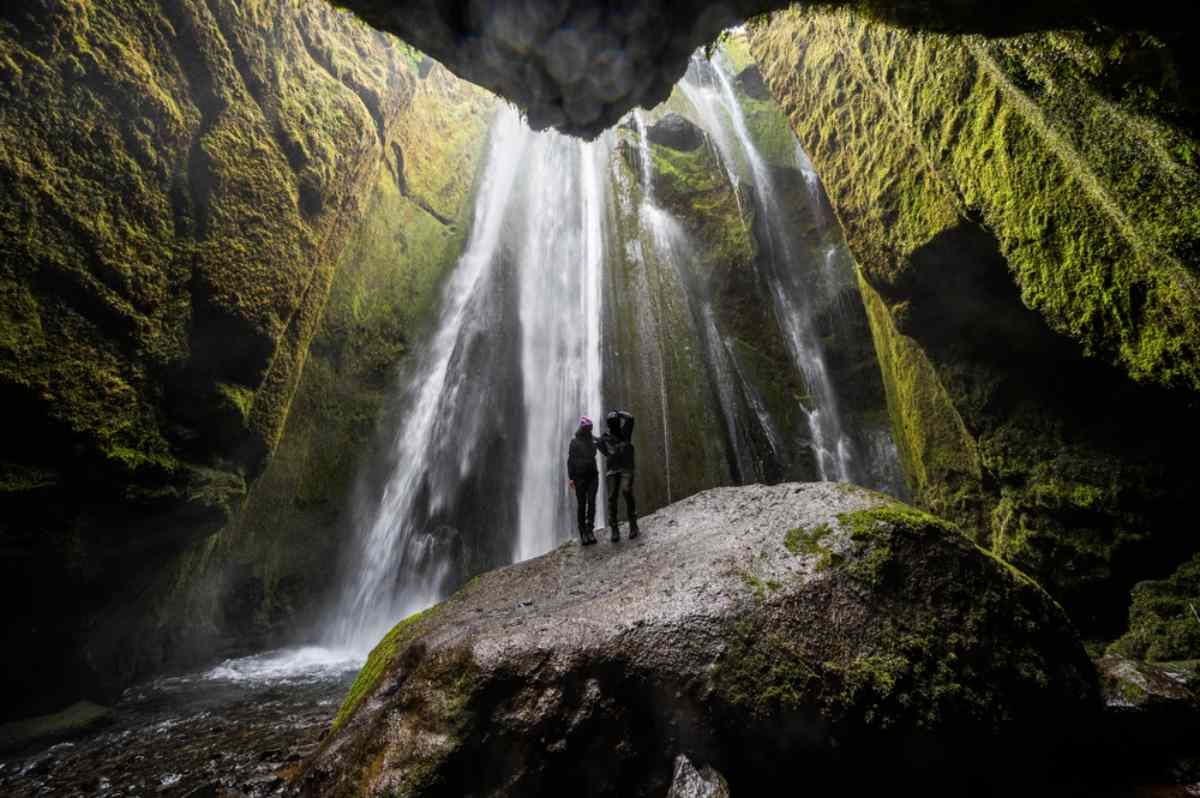
Iceland feels small on a map, yet distances stretch once wind, weather, and narrow roads factor in. If you’re building a structured route, tools help. Bazar Travels offers a free itinerary planner that makes it easier to map stops, track drive times, and organize lodging across multiple regions – especially useful in a country where daylight hours and road conditions shift fast.
Seven days is enough. But only if you move smart.
Day 1: Arrive in Reykjavik and the Blue Lagoon
Most international flights land at Keflavík International Airport. Instead of rushing straight into long drives, ease into the landscape. The Blue Lagoon sits between the airport and Reykjavik, making it a logical first stop. The geothermal water is warm year-round, surrounded by black lava fields that feel almost lunar.
After soaking, drive 45 minutes into Reykjavik. Walk the compact downtown area. Visit Hallgrímskirkja for panoramic city views. Stroll along the harbor near Harpa Concert Hall. Dinner should be simple – fresh seafood or lamb. Sleep early.
Jet lag is real here.
Day 2: The Golden Circle
The Golden Circle is Iceland’s most concentrated sightseeing loop. Start early. Thingvellir National Park is first – a rift valley where the North American and Eurasian tectonic plates separate. The Alþingi parliament once met here in 930 AD, making it historically significant beyond geology.
Next, drive to the Geysir geothermal area. Strokkur erupts every few minutes, sending boiling water skyward. It smells of sulfur; the ground steams in cold air. Then continue to Gullfoss, a powerful two-tier waterfall that thunders into a canyon.
Return to Reykjavik or stay near Selfoss to shorten tomorrow’s drive.
Day 3: South Coast Waterfalls and Vik
This is where Iceland begins to feel cinematic. Drive along Route 1 toward the south coast. Stop at Seljalandsfoss, where you can walk behind the waterfall when conditions allow. Then visit Skógafoss – wide, forceful, often crowned with rainbows in sunlight.
Continue east toward Vik. Black sand beaches like Reynisfjara stretch wide under basalt columns and sharp sea stacks. The waves here are dangerous; sneaker waves pull people into cold Atlantic water. Stay back.
Spend the night near Vik or Kirkjubæjarklaustur.
Day 4: Vatnajökull and Jökulsárlón Glacier Lagoon
Today feels larger. Vast. Drive through lava fields and moss-covered plains toward Vatnajökull National Park, home to Europe’s largest glacier. Ice tongues spill from mountain ridges. Glacial rivers braid across black sand.
Jökulsárlón Glacier Lagoon is the highlight. Icebergs break off the glacier and float slowly toward the sea. Across the road, Diamond Beach glitters with chunks of ice resting on black sand.
Stay near Höfn or in guesthouses nearby. The sky feels wider here.
Day 5: Eastfjords or Return West
With only seven days, choices tighten. You can continue around the Ring Road into the Eastfjords – quieter roads, fishing villages, dramatic coastal cliffs. Or begin returning west along the same route, using different pull-offs and hiking short trails missed earlier.
The Eastfjords reward patience. Narrow roads trace the coastline; sheep wander freely. It’s less visited, more isolated. If weather shifts badly, turning back west may be smarter.
Flexibility matters in Iceland.
Day 6: Snaefellsnes Peninsula
From Reykjavik, head north toward the Snaefellsnes Peninsula if you’ve returned west. This region compresses many Icelandic landscapes into one area – lava fields, fishing villages, cliffs, and the iconic Kirkjufell mountain.
Snaefellsjökull glacier sits at the peninsula’s tip. Jules Verne used it as the fictional entrance to the center of the Earth. Drive slowly; coastal weather changes quickly.
Return to Reykjavik for the night.
Day 7: Reykjavik and Departure
Keep the final day light. Explore Reykjavik’s museums if missed earlier. Walk Laugavegur shopping street. Visit local pools – they are cheaper and more authentic than the Blue Lagoon.
Allow at least 45 minutes to drive to Keflavík Airport. Fuel up before returning rental cars. Weather delays are common; monitor flight updates.
Then fly home.
Driving Tips for a 7 Day Iceland Itinerary
A rental car is essential for this route. Choose 4WD if traveling outside summer months. Weather shifts rapidly – wind can be more dangerous than snow. Check road conditions daily through official Icelandic road services.
Gas stations can be sparse in remote areas; refill when half empty. Daylight hours shrink dramatically in winter. In December, you may only have four to five hours of usable light.
Plan around the sun.
When This 7 Day Iceland Itinerary Works Best
Late spring through early fall offers the safest driving conditions and longest daylight hours. Winter adds northern lights opportunities but complicates road travel. Seven days in winter often requires reducing distance and focusing on the south coast.
Summer crowds cluster at major stops like Gullfoss and Jökulsárlón. Arrive early or late to avoid tour buses.
Timing shapes the experience.
Final Thoughts on One Week in Iceland
This 7 day Iceland itinerary balances iconic highlights with manageable driving distances. It avoids racing the entire Ring Road in unrealistic time. Seven days means choosing depth over full circumference.
Iceland rewards slow stops – watching light shift across glaciers, hearing waterfalls before seeing them, standing alone beside moss-covered lava fields.
Map the route carefully. Build buffer time. Track bookings in one place. And if organizing multi-stop drives feels overwhelming, using a structured tool like a free itinerary planner can keep the entire week clear before wheels even hit the road.
Iceland feels wild. Keep the plan steady.
