
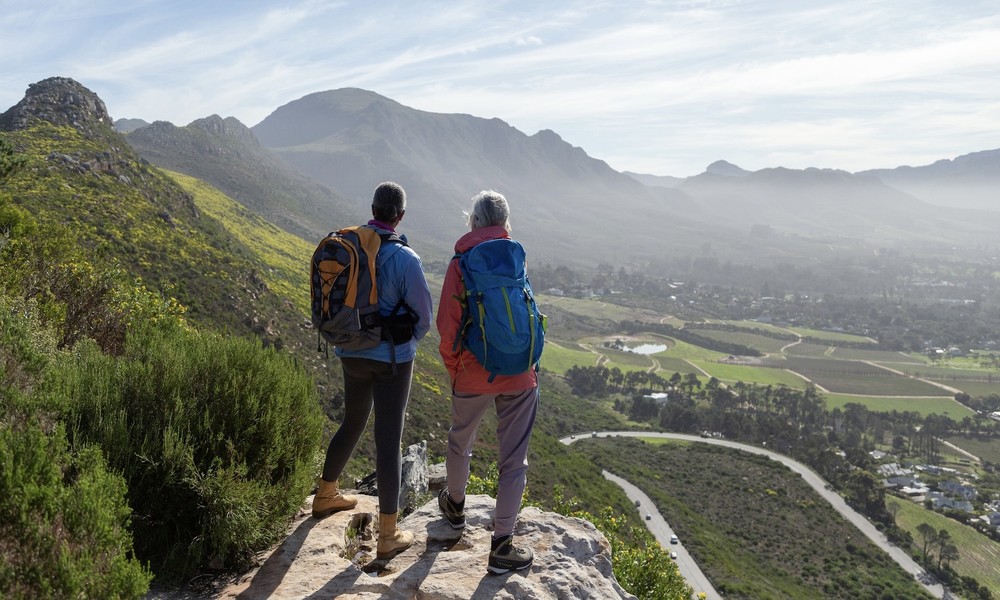
Not every trail in the Alps becomes popular, even if the scenery looks just as impressive on paper. What really drives foot traffic is a mix of how easy it is to get there, how demanding the route feels, and how quickly it delivers views. Trails that start close to towns, train stations, or parking areas naturally attract more people because they don’t require complex planning. Add a moderate difficulty level and you suddenly have something that works for a wide range of visitors. That’s why the same routes keep appearing in travel plans year after year. They simply fit into real travel constraints better than more remote alternatives.
Valleys Decide More Than Maps Do
Looking at a map doesn’t always explain why certain trails are packed while others remain quiet. The real structure of movement in the Alps is shaped by valleys, not by straight-line distances. Roads, railways, and villages all follow these natural corridors, which means most hikes begin and end within them. If a trail connects two valleys or climbs directly from one, it automatically becomes more practical to reach. That practicality matters more than people expect, because it reduces the time and effort needed just to start hiking. As a result, routes located along major valley systems quietly become default choices, even if hikers don’t consciously think about it.
Infrastructure Changes What “Accessible” Means
Cable cars and mountain railways have completely reshaped how people move through the Alps. A climb that once required hours of steady effort can now be shortened to a quick ride, which changes who can attempt it. This doesn’t just make trails easier-it makes them viable for people who might otherwise skip them entirely. Once that happens, accommodation and services tend to cluster nearby, reinforcing the same pattern. When a well-known trail sits close to an Alpine hotel, it becomes part of a system where everything-sleeping, transport, and hiking-fits together with minimal friction. That convenience is often the deciding factor, even more than the trail itself.
Scenic Value Still Matters-But in a Specific Way
Of course, landscapes matter, but not every beautiful place becomes popular. The difference usually comes down to how quickly and consistently the scenery shows up along the route. Trails that offer early views tend to hold attention better than those that save everything for the summit. If hikers spend hours walking through forests before reaching an open panorama, the experience feels less efficient, even if the final view is spectacular. On the other hand, routes with constant visual rewards-lakes, ridgelines, glaciers-feel more engaging from start to finish. That steady payoff plays a bigger role in popularity than raw elevation or technical difficulty.
The Trade-Off: Accessibility vs Experience
There’s a downside to all this accessibility, and it becomes obvious during peak season. The same features that make a trail easy to reach also make it crowded. Narrow paths turn into slow-moving lines, viewpoints get congested, and the sense of space disappears. For some visitors, that’s just part of the experience, but for others it can feel frustrating. The environment also takes a hit, with heavier erosion and more pressure on facilities like huts and rest areas. In practice, the most famous trails often require the most careful planning, which is a bit counterintuitive.
Timing and Strategy Make a Big Difference
Small decisions can completely change how a popular trail feels. Starting early in the morning, choosing a weekday, or hiking slightly outside the main season can reduce crowd exposure dramatically. Even within the same area, picking a less direct variant of a route often leads to quieter sections. These aren’t complicated strategies, but they require thinking beyond the obvious “top trails” lists. Once you start looking at how people move through the landscape, it becomes easier to predict where the pressure points will be.
There’s Always an Alternative Nearby
One thing that becomes clear after a bit of experience is that the Alps are full of “second-choice” routes that are just as rewarding. They might lack a cable car, or they might start a bit farther from the main valley, but the trade-off is space and quiet. These trails don’t appear in every guide, yet they often offer a more relaxed version of the same landscape. Popular routes aren’t necessarily better-they’re just easier to fit into a standard itinerary. Once you step slightly outside that structure, the Alps start to feel very different.
